How to Mentally Recover After Failure
Published: 2 Mar 2026
Failure hurts. Whether it’s an exam, a job interview, a business loss, or a personal mistake, it can make you feel disappointed, embarrassed, or even hopeless. Sometimes it feels like all your hard work meant nothing.
But here is the truth: failure is not the end. It is a part of life. Every successful person has failed many times before reaching their goals. What matters most is not the failure itself — it is how you mentally recover and move forward.
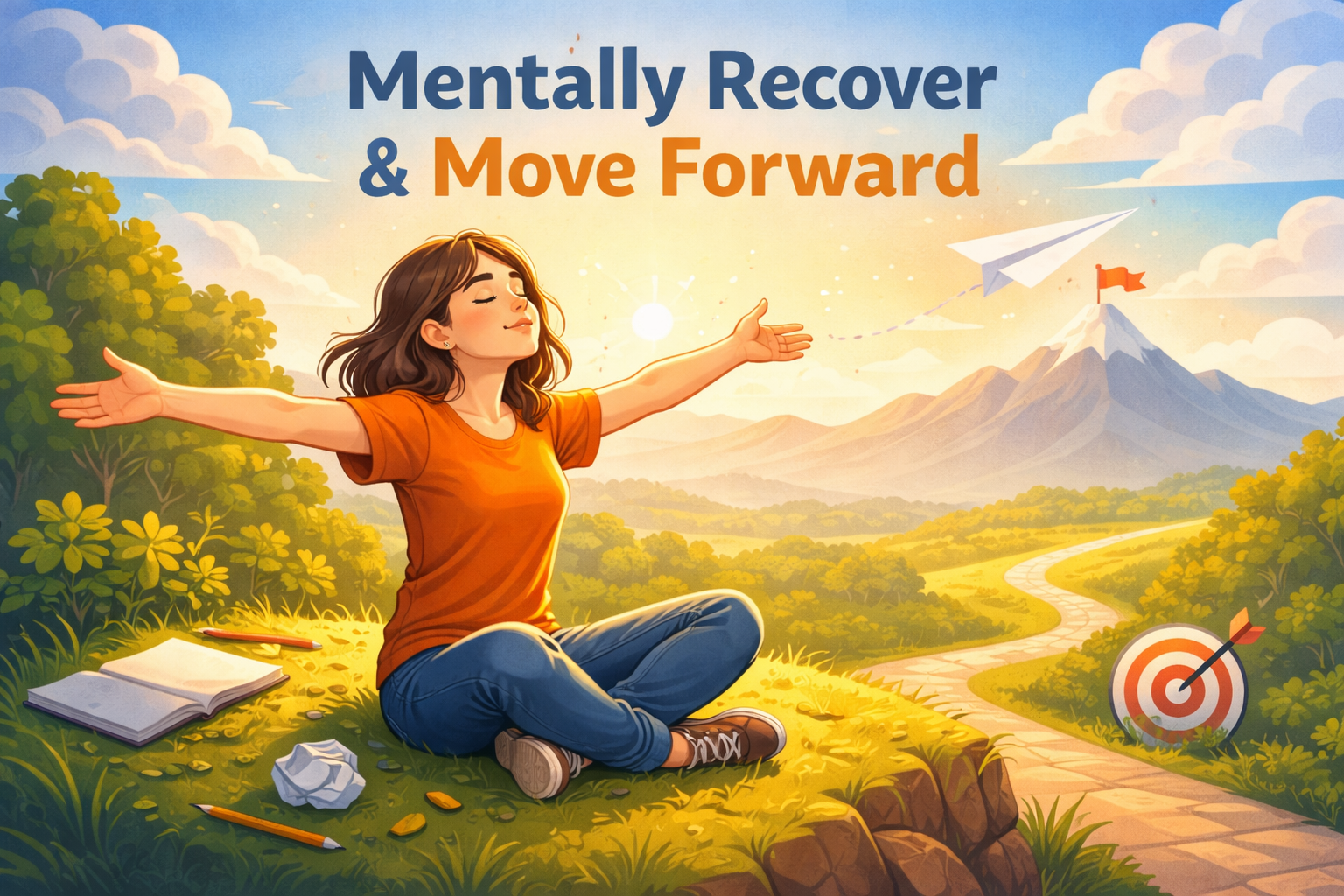
Accept Your Feelings First
Before you try to “move on,” allow yourself to feel.
- It’s okay to feel sad, angry, or frustrated.
- Don’t pretend you’re fine if you’re not.
- Avoid blaming yourself too harshly.
- Give yourself a little time to process what happened.
Ignoring emotions only makes them stronger later. Accepting them helps you heal faster.
Stop Negative Self-Talk
After failure, your mind may say things like, “I’m not good enough” or “I always mess up.” This kind of thinking damages your confidence.
- Replace “I failed” with “I learned something.”
- Remember one mistake does not define your whole life.
- Talk to yourself like you would talk to a close friend.
- Focus on facts, not fears.
Your inner voice should support you, not destroy you.
Understand What Went Wrong
Failure becomes powerful when you learn from it.
- Ask yourself: What exactly didn’t work?
- Was it lack of preparation? Timing? Strategy?
- Write down lessons you learned.
- Identify what you can improve next time.
This turns failure into a learning experience instead of a painful memory.
Separate Yourself From the Failure
You are not your mistake.
- Failing at something does not mean you are a failure.
- One event cannot decide your worth.
- Everyone makes mistakes — it’s part of growth.
- Focus on your strengths and past successes.
Your identity is bigger than one bad result.
Take Small Positive Actions
Recovery becomes easier when you take action.
- Start with small goals to rebuild confidence.
- Improve one skill related to your failure.
- Create a simple step-by-step plan.
- Celebrate small progress.
Small wins slowly repair broken confidence.
Talk to Someone You Trust
Keeping everything inside makes things heavier.
- Share your feelings with a friend or family member.
- Ask for advice from someone experienced.
- Listen to other people’s failure stories — you’ll realize you’re not alone.
- Avoid people who judge or discourage you.
Support makes recovery faster and healthier.
Practice Self-Care
Your mind and body are connected.
- Get enough sleep.
- Eat healthy food.
- Go for a walk or do light exercise.
- Try deep breathing or short meditation.
Taking care of your body helps calm your thoughts.
Give Yourself Time
Healing does not happen in one day.
- Don’t rush your recovery.
- Be patient with yourself.
- Understand that growth takes time.
- Trust that better opportunities will come.
Time slowly reduces the pain and increases wisdom.
Change Your Perspective About Failure
Successful people see failure differently.
- Failure is feedback, not defeat.
- It shows you what needs improvement.
- It builds mental strength.
- It prepares you for bigger success.
If you change how you see failure, it loses its power over you.
The Girl Who Chose to Move On
Emily stood alone in the empty classroom, staring at the results board. Her name wasn’t on the list. She had worked hard for months, but she didn’t pass the exam she dreamed about.

Her chest felt heavy. “Maybe I’m not smart enough,” she thought. The room felt colder, and the noise of other students celebrating made it worse. She quietly packed her bag and walked home with tears in her eyes.
That evening, Emily sat by her window watching the sunset. For a moment, she wanted to give up completely. But then she remembered something her mother once told her:
“One bad day does not decide your whole life.”
Emily wiped her tears and opened her notebook. Instead of closing the chapter, she started writing a new plan. She wrote down what went wrong, what she could improve, and how she would prepare differently next time.
It wasn’t easy. Some days she still felt disappointed. But she kept going — step by step, page by page.
Months later, Emily walked into another exam hall. This time, she felt stronger. Not because she was never scared again, but because she had learned how to stand up after falling.
Emily realized that moving on doesn’t mean pretending nothing happened. It means learning, growing, and believing that your story is not over yet.
And sometimes, the strongest girls are not the ones who never fail — they are the ones who refuse to stay down.
Final Thoughts
Failure feels painful, but it can also be a powerful teacher. Every setback carries a lesson, and every lesson makes you stronger. Mental recovery is not about pretending nothing happened — it is about accepting it, learning from it, and moving forward with courage.
Remember, one failure does not end your story. It is just one chapter — and you still have many beautiful chapters ahead.