Failure Teaches Us More Than Success
Published: 5 Oct 2025
Failure means not achieving what you aimed for or when things don’t go as planned. It’s that moment when you try your best but the result isn’t what you hoped for. While it can feel disappointing or frustrating, failure isn’t something to fear—it’s a chance to learn, improve, and come back stronger.
In simple words,Failure Teaches Us More Than Success and failure is life’s way of teaching us lessons. Everyone experiences it, and each failure gives us insight, builds resilience, and helps us grow in ways success alone often can’t.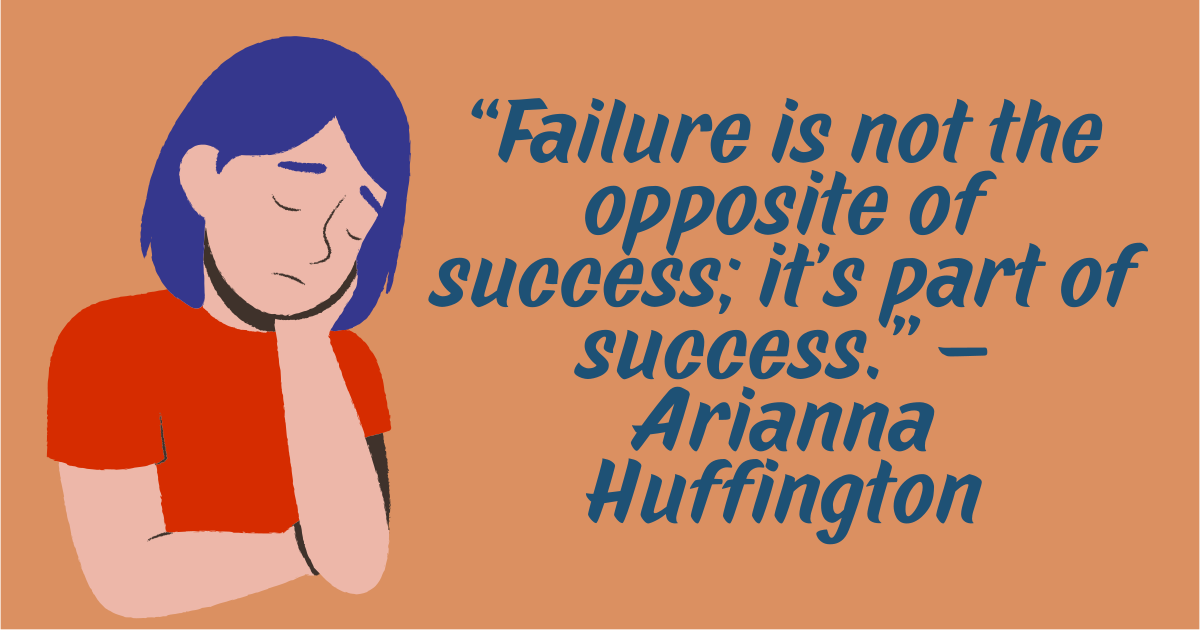
What is Failure & How Common Is It
Failure happens when things don’t go as we planned or when we don’t achieve the results we hoped for. It can happen in any part of life—our work, studies, relationships, or personal goals. While it often feels discouraging, failure isn’t the end of the road. In fact, it’s a natural part of life that teaches us lessons, helps us grow, and prepares us for future success.
The truth is, failure is extremely common. Everyone experiences it—no one is exempt. Even the most successful people have faced setbacks, made mistakes, or fallen short of their goals at some point. Understanding that failure is universal makes it easier to accept, learn from, and use it as a stepping stone toward growth and improvement.
“Failure is not the opposite of success; it’s part of the journey to success.”
Types of failures
1. Personal Failure
- Not reaching personal goals can feel disappointing, but it helps you understand yourself better.
- Teaches self-discipline by showing what habits need improvement.
- Builds patience when progress is slower than expected.
- Encourages reflection on strengths and weaknesses.
- Helps develop resilience to keep trying despite setbacks.
2. Professional / Work Failure
- Missing deadlines or failing projects highlights areas for skill improvement.
- Teaches time management and planning for future tasks.
- Encourages problem-solving and creative thinking.
- Builds perseverance and determination in challenging situations.
- Helps you understand the importance of learning from mistakes.
3. Social / Relational Failure
- Conflicts or misunderstandings teach empathy and listening skills.
- Helps improve communication in personal and professional relationships.
- Encourages emotional intelligence and self-awareness.
- Builds patience in dealing with different personalities.
- Shows the importance of trust and maintaining strong connections.
4. Financial Failure
- Overspending or poor investments teach responsibility and planning.
- Helps understand the value of budgeting and saving.
- Encourages smarter decision-making in the future.
- Shows the consequences of financial mistakes in a practical way.
- Builds discipline and long-term financial awareness.
5. Creative / Innovation Failure
- Rejected ideas or failed projects spark creativity and experimentation.
- Encourages risk-taking and thinking outside the box.
- Teaches adaptability when initial plans don’t work.
- Builds resilience to handle criticism or setbacks.
- Helps discover better approaches for future ideas.
6. Unexpected / Circumstantial Failure
- Situations beyond control teach adaptability and flexibility.
- Encourages quick problem-solving under pressure.
- Helps manage stress and uncertainty effectively.
- Builds patience and emotional strength.
- Shows that setbacks are natural and can be overcome.
How to Move On After Failure
Moving on after failure isn’t always easy, and it’s completely normal to feel frustrated, disappointed, or even a little lost when things don’t go as planned. Sometimes it feels like all your efforts were wasted, but the truth is that failure is never final. It’s just a part of life’s learning process, and how you respond to it makes all the difference.
1. Accept Your Emotions
When failure happens, it’s natural to feel upset, frustrated, or disappointed. Trying to ignore or push away these emotions often makes them stronger. Instead, give yourself permission to feel what you’re feeling. Recognize that it’s okay to be upset—it doesn’t make you weak, it makes you human.
Once you acknowledge your emotions, it becomes easier to process them. Journaling, talking to someone you trust, or simply sitting quietly and reflecting can help you understand your feelings. Accepting emotions is the first step toward letting go and moving forward.
2. Learn From the Experience
Every failure carries lessons, even if they aren’t obvious at first. Take time to reflect on what went wrong and what you could have done differently. This is not about blaming yourself, but about finding areas to improve and grow.
Write down the key takeaways from the experience and think about how to apply them in the future. By actively learning from failure, you turn setbacks into stepping stones that help you make smarter decisions and avoid repeating the same mistakes.
3. Focus on Solutions, Not Problems
It’s easy to get stuck thinking about what went wrong, but dwelling on the problem keeps you stuck. Instead, shift your focus toward solutions. Ask yourself, “What can I do now to move forward?”
Breaking the problem into actionable steps makes it less overwhelming. Even small actions count, like adjusting your strategy, seeking help, or practicing a skill. Focusing on solutions gives you control and a sense of direction.
4. Stay Positive and Keep Perspective
Failure can feel heavy, but it’s important to remember that setbacks are temporary. One failed attempt doesn’t define your abilities or your future. Staying positive means reminding yourself that challenges are part of growth.
Try to view failure as feedback, not as a final verdict. Maintaining perspective helps reduce stress and encourages a mindset where setbacks are simply lessons, not permanent defeats.
5. Set New Goals and Take Small Steps
After a failure, it’s important to refocus your energy on achievable goals. Start small to regain confidence and create momentum. Small wins build motivation and make bigger goals feel manageable.
Break your long-term goals into smaller tasks that you can tackle one at a time. Each step forward is progress, and celebrating small victories helps you stay encouraged and committed to trying again.
6. Seek Support When Needed
Failure can feel isolating, but talking to someone you trust can lighten the load. Friends, mentors, or family can provide encouragement, advice, and perspective that you might not see on your own.
Support also helps keep you accountable and motivated. Sharing your feelings and plans for the next steps can reduce stress, boost confidence, and help you feel more capable of moving forward.
7. Keep Trying
Resilience is built by persistence. Even if things don’t work out immediately, continuing to try and adapt is what eventually leads to success. Every attempt teaches something new.
Remember, failure is not a permanent barrier—it’s a part of the journey. Keep experimenting, adjusting your approach, and moving forward. Over time, repeated efforts turn setbacks into valuable experience and progress.
8. Practice Self-Compassion
It’s easy to be hard on yourself after failing, but being overly critical only makes moving on harder. Treat yourself kindly, like you would a friend who’s going through a tough time.
Forgive yourself for mistakes and remind yourself that failure doesn’t define your worth. Self-compassion helps you recover emotionally and stay motivated to try again.
9. Reflect on What Really Matters
Failure can help you re-evaluate your priorities and see what’s truly important in your life. Sometimes setbacks highlight areas that need more attention or a new approach.
Take time to reflect on your goals, values, and long-term vision. Reflection gives clarity, helps you make better decisions, and can guide you toward more meaningful outcomes.
10. Learn to Adapt
Not every plan works perfectly, and failure often shows us the need to be flexible. Adapting means adjusting your approach without losing sight of your goal.
Look at what didn’t work and think about alternative ways to reach your objectives. Being adaptable helps you handle challenges more smoothly and opens doors to new opportunities.
11. Celebrate Small Wins
Even after a failure, it’s important to acknowledge small achievements along the way. Every small step forward counts and builds momentum.
Celebrating little victories keeps your motivation alive and reminds you that progress is happening, even if the bigger goal hasn’t been reached yet.
12. Keep a Growth Mindset
A growth mindset means seeing failure as an opportunity to improve rather than a reflection of your abilities. It encourages learning and persistence.
Focus on the lessons you can take from each setback. Embracing a growth mindset helps you see challenges as chances to develop skills, resilience, and confidence.
13. Take Care of Yourself
After a failure, it’s easy to neglect your physical and mental well-being. But taking care of yourself is essential to move forward.
Eat well, exercise, get enough rest, and spend time doing things that make you happy. A healthy body and mind give you the energy and focus needed to overcome setbacks.
It’s normal to feel stuck because failure can be overwhelming. Take time to process your emotions and focus on small, manageable steps forward.
Shift your focus from the problem to solutions. Reflect on what you learned and plan actionable steps instead of dwelling on what went wrong.
Start with small, achievable goals and celebrate progress. Each small win rebuilds confidence and motivates you to keep moving forward.
Absolutely! Talking to friends, family, or mentors can give you perspective, encouragement, and practical advice for the next step.
Use failure as a learning opportunity. Analyze what went wrong, adapt your approach, and focus on growth rather than perfection.